
Montenegro SIM Card vs eSIM: EU Roaming, Cruise Stops & Coverage (2026)
Montenegro isn't in EU Roam Like at Home. Compare tourist SIMs and eSIMs for Kotor, Budva and Durmitor, including cruise day stops. Plans from $2.
ReadAuthor
Angelus Sharma
Published
August 1, 2026

Toronto is the kind of city where your plans can change completely within a few streets.
One moment, you're looking down at the skyline from hundreds of metres above the city. A few hours later, you could be walking through colourful street art, exploring an enormous museum, eating your way through a historic market, cycling beside Lake Ontario, or watching the sunset from the Toronto Islands.
Canada's largest city brings together architecture, food, art, multicultural neighbourhoods, museums, shopping, parks, sports, and waterfront experiences in one enormous urban destination.
That variety is exactly what makes Toronto exciting—and slightly difficult to plan.
If you're visiting for the first time, these 20 attractions and experiences deserve a place on your Toronto itinerary.
And because you'll probably spend a good portion of your trip using maps, booking tickets, checking public transport, finding restaurants, and sharing photos, arranging mobile data before arrival can save time. Travellers can purchase a Canada travel eSIM through eSIMLLY before travelling and arrive with their connectivity already prepared.
Let's explore Toronto.
Location: 301 Front Street West
Best time to visit: Spring and summer generally offer better chances of clear views, although the attraction operates throughout the year.
If Toronto has one instantly recognisable landmark, it's the CN Tower.
Rising approximately 553 metres, the tower dominates Toronto's skyline and provides extraordinary views across the city and Lake Ontario.
Visitors can head to the observation areas to see Toronto from above, while those looking for something considerably more adventurous can experience EdgeWalk.
The experience takes participants outside the tower while secured with specialised safety equipment.
If heights aren't your thing, you can enjoy the observation areas instead.
Travel tip: Try visiting close to sunset. You'll have an opportunity to see Toronto during daylight before watching the city illuminate after dark.
Location: 100 Queens Park
Best time to visit: Weekdays are generally better if you'd prefer fewer crowds.
Toronto isn't only about skyscrapers.
The Royal Ontario Museum, commonly called the ROM, brings together natural history, world cultures, archaeology, art, and science.
Its collections contain millions of objects and specimens.
Depending on the exhibitions available during your visit, you could encounter everything from dinosaur fossils and ancient artefacts to artwork and cultural collections from around the world.
Even the building itself deserves attention.
The museum's striking modern extension contrasts dramatically with the historic architecture surrounding it, making the ROM one of Toronto's most distinctive buildings.
Allow several hours if museums are an important part of your trip.
Best time to visit: Summer is ideal for outdoor activities.
One of Toronto's best experiences requires leaving downtown—without really leaving Toronto.
A short ferry journey takes you across Lake Ontario to the Toronto Islands.
The islands provide a completely different atmosphere from the dense city centre.
Visitors can enjoy:
Beaches
Cycling
Kayaking
Picnic areas
Walking trails
Parks
Toronto skyline views
Cars aren't part of the normal visitor experience across much of the islands, helping create a quieter environment.
The return view toward downtown is also one of the best places to photograph Toronto's skyline.
If you're visiting during warm weather, consider dedicating at least half a day to the islands.
Location: 288 Bremner Boulevard
Best time to visit: Weekdays and earlier hours can help you avoid the busiest periods.
Located near the CN Tower, Ripley's Aquarium of Canada is one of Toronto's most popular family attractions.
Its exhibits showcase marine environments and species ranging from colourful fish to rays, sharks, and jellyfish.
One of its signature experiences is the underwater tunnel, where visitors move through a transparent passage surrounded by marine life.
It's particularly useful as an indoor activity during Toronto's colder winter months or on rainy days.
Families travelling with children can easily combine the aquarium with the CN Tower because the attractions are close together.
Location: 93 Front Street East
Toronto is one of the world's most multicultural cities, and food is one of the best ways to experience that diversity.
St. Lawrence Market has been part of Toronto's food culture for generations.
Inside, you'll find vendors selling products such as:
Fresh produce
Meat
Seafood
Cheese
Bread and pastries
Prepared meals
Local specialities
Rather than arriving immediately after a large breakfast, come hungry.
A particularly famous Toronto speciality to look for is the peameal bacon sandwich, which has become closely associated with the city.
Location: 1 Austin Terrace
Best time to visit: Spring and summer are particularly attractive when the surrounding gardens are active.
Toronto isn't where most travellers expect to find a castle.
Yet that's essentially what awaits at Casa Loma.
The Gothic Revival mansion features grand rooms, historic interiors, towers, gardens, tunnels, and hidden passages.
Its dramatic architecture has also made it attractive as a filming location.
For travellers interested in architecture, photography, history, or simply unusual attractions, Casa Loma provides a very different experience from downtown Toronto.
Location: 317 Dundas Street West
Art lovers should reserve time for the Art Gallery of Ontario, commonly known as the AGO.
Its extensive collection spans Canadian and international art across multiple periods and mediums.
Visitors can explore paintings, sculptures, photographs, installations, and changing exhibitions.
The building itself is also part of the experience, combining historic architecture with modern design.
Check current opening hours and exhibitions before visiting, particularly if there's a specific collection you want to see.
Location: 55 Mill Street
The Distillery District feels noticeably different from modern downtown Toronto.
Its pedestrian streets are surrounded by preserved industrial and Victorian-era architecture that now houses:
Restaurants
Cafés
Boutiques
Galleries
Independent shops
It's particularly atmospheric around the holiday season, when seasonal decorations and events transform the neighbourhood.
But the district is worth exploring throughout the year.
Come during the afternoon, explore the shops, stay for dinner, and watch the neighbourhood change as the lights come on.
Location: 1873 Bloor Street West
Need a break from concrete and skyscrapers?
Head to High Park.
As one of Toronto's largest and most popular green spaces, the park offers walking trails, recreational areas, gardens, natural areas, and places to relax.
Spring attracts considerable attention because of the park's cherry blossoms.
During warmer months, it's ideal for:
Picnics
Walking
Photography
Relaxing outdoors
Family activities
It's an easy way to add nature to an otherwise urban Toronto itinerary.
Location: 30 Yonge Street
You don't need to understand every rule of hockey to appreciate how deeply the sport is connected to Canadian culture.
The Hockey Hall of Fame explores the players, teams, history, memorabilia, and major achievements associated with the game.
Visitors can see hockey artefacts, explore interactive exhibits, test their own skills, and see the famous Stanley Cup.
Sports fans should put this high on their Toronto list.
Location: 1 Dundas Street East
Formerly known as Yonge-Dundas Square, Sankofa Square sits in one of Toronto's busiest urban areas.
Large digital screens, crowds, shops, performances, events, and nearby entertainment create an atmosphere often compared with major commercial squares in other global cities.
It's particularly interesting at night when the surrounding screens and signs illuminate the area.
Check Toronto's event calendar before visiting because public performances and community events frequently take place around the square.
If you want to understand Toronto beyond its major landmarks, spend some time walking around Kensington Market.
The neighbourhood is colourful, unconventional, multicultural, and full of personality.
Expect to find:
Vintage stores
Independent shops
Street art
Cafés
Restaurants
International food
Small markets
Rather than treating Kensington Market as a single attraction, give yourself time to wander.
The fun comes from discovering places you weren't specifically searching for.
Location: 235 Queens Quay West
Toronto's relationship with Lake Ontario is easy to underestimate until you reach the waterfront.
The Harbourfront area combines cultural spaces, public areas, walking routes, events, performances, and excellent views across the water.
Summer is particularly lively, with outdoor activities and events taking place along the waterfront.
It's also an excellent area to combine with a ferry trip to the Toronto Islands.
By this point in your Toronto itinerary, your phone will probably have been used for almost everything.
You may need it to:
Navigate between attractions.
Check Toronto public transport.
Purchase attraction tickets.
Find nearby restaurants.
Reserve tables.
Book ride-hailing services.
Check opening hours.
Translate information.
Message friends or family.
Upload photographs.
Instead of relying entirely on public Wi-Fi or activating international roaming after arrival, you can prepare a Canada travel eSIM through eSIMLLY before your trip.
eSIMLLY provides travel eSIM services across more than 160 countries and regions, making it useful not only for Canada but also for travellers combining Toronto with destinations elsewhere in North America or around the world.
Once you've sorted out connectivity, you can spend more time exploring and considerably less time searching for Wi-Fi.
Location: Queen Street West
Queen Street West brings together shopping, dining, fashion, music, art, and city life.
Independent boutiques sit alongside restaurants, cafés, galleries, and larger retailers.
It's particularly suitable for travellers interested in:
Local fashion
Shopping
Coffee
Street photography
Restaurants
Contemporary Toronto culture
Nearby Trinity Bellwoods Park also provides somewhere to relax after exploring the neighbourhood.
Location: 100 Queen Street West
For one of the classic Toronto photographs, head to Nathan Phillips Square.
The public square is home to Toronto City Hall and the city's well-known TORONTO sign.
Its atmosphere changes with the seasons.
During warmer months, the square hosts public activities and events.
In winter, skating becomes one of the major attractions.
If this is your first trip to Toronto, it's an easy stop to combine with other downtown attractions.
Location: 77 Wynford Drive
The Aga Khan Museum provides an opportunity to explore Islamic art, culture, history, and architecture.
Its collections and exhibitions highlight artistic traditions across different periods and regions.
The museum's architecture and landscaped surroundings are also significant parts of the experience.
For travellers interested in cultural history, design, art, or architecture, it's well worth travelling beyond the downtown core.
Location: 327 Bloor Street West
A museum devoted to shoes might sound unusually specific.
That's exactly what makes the Bata Shoe Museum interesting.
Its collections examine footwear through history, design, culture, craftsmanship, status, and fashion.
Rather than simply displaying shoes, the museum explores what footwear can reveal about different societies and periods.
It's also a useful indoor attraction for rainy or cold Toronto days.
Location: Eastern Toronto along Lake Ontario
Toronto has skyscrapers.
Toronto has museums.
Toronto also has beaches.
The aptly named Beaches neighbourhood provides a relaxed alternative to downtown, with sandy waterfront areas, cafés, shops, and recreational spaces.
Summer is the obvious time to visit.
Walk along the waterfront, spend some time on the sand, explore the neighbourhood, or simply take a break from sightseeing.
Seasonal cultural events can make the area even livelier during warmer months.
Location: Rush Lane
Toronto's creative personality isn't confined to museums.
Graffiti Alley turns an urban laneway into a constantly changing outdoor gallery.
Walls throughout the area feature colourful murals, lettering, characters, and street art created by different artists.
Because the artwork changes, repeat visitors may encounter something different each time.
It's free to explore and particularly popular with photographers.
Respect the artwork and the surrounding neighbourhood while visiting.
Location: 475 Queens Quay West
Finish your Toronto itinerary somewhere peaceful.
The Toronto Music Garden is a waterfront garden whose design draws inspiration from Bach's Suite No. 1 in G Major.
Different sections of the garden reflect movements from the composition, creating an unusual connection between landscape architecture and music.
Summer is particularly attractive when the garden is in bloom.
After several days of skyscrapers, museums, markets, shops, and busy streets, this is a fitting place to slow things down.
For first-time visitors, three to four days provides enough time to experience many of the city's major attractions without rushing constantly.
A simple itinerary could look like this:
Day 1: CN Tower → Ripley's Aquarium → Harbourfront → Toronto Islands
Day 2: Royal Ontario Museum → Kensington Market → Queen Street West → Graffiti Alley
Day 3: St. Lawrence Market → Distillery District → Hockey Hall of Fame → Nathan Phillips Square
Day 4: Casa Loma → High Park → Aga Khan Museum or The Beaches
If Toronto is part of a longer Canada trip, spending four or five days gives you more flexibility.
Toronto is genuinely a year-round destination, but each season offers something different.
Ideal for parks, cherry blossoms, and comfortable sightseeing.
Best for Toronto Islands, beaches, waterfront activities, festivals, and outdoor dining.
Cooler temperatures and changing foliage make walking around the city particularly pleasant.
Expect cold temperatures, but you'll also find skating, festive events, museums, indoor attractions, and a very different side of Toronto.
Choose the season based on what you want to experience rather than assuming there's only one good time to visit.
Toronto is a city you'll explore with your phone constantly in your hand.
You'll use mobile data to navigate between the CN Tower and Kensington Market, check ferry schedules for the Toronto Islands, find restaurants around St. Lawrence Market, book attraction tickets, check weather conditions, communicate with your accommodation, and share photographs throughout the trip.
That's where eSIMLLY fits naturally into a Toronto travel plan.
With travel eSIM services covering more than 160 countries and regions, travellers can arrange their mobile connectivity before departure instead of spending valuable holiday time searching for a physical SIM after arriving in Canada.
For visitors combining Toronto with other international destinations, having access to country-specific and regional travel eSIM options can make managing connectivity across the journey considerably simpler.
Your Toronto itinerary should be about deciding whether to visit the CN Tower or Toronto Islands first—not deciding where to buy a SIM card.
Toronto rewards travellers who explore beyond a checklist.
See the skyline from above. Walk through neighbourhoods instead of simply travelling between attractions. Eat something you've never tried. Take the ferry across Lake Ontario. Explore the museums. Photograph the street art. Spend an afternoon in a park. And leave enough room in your itinerary to discover something unexpected.
With your accommodation, attractions, transport, and connectivity prepared before departure, you'll have more freedom to enjoy the city once you arrive.
The future of travel is connected, digital, and increasingly seamless. As travellers rely more heavily on smartphones for navigation, reservations, transportation, payments, and communication, having mobile data available throughout a trip has become part of good travel planning.
For a destination as large and connected as Toronto, eSIMLLY gives international visitors a simple way to prepare their connectivity in advance, with travel eSIM services available across 160+ countries and regions worldwide.
Instant activation, hotspot included and no roaming fees in the destinations from this guide.
Montenegro isn't in EU Roam Like at Home. Compare tourist SIMs and eSIMs for Kotor, Budva and Durmitor, including cruise day stops. Plans from $2.
Read
Zvartnots airport SIM or eSIM? Compare Armenia's operators, tourist bundle prices and when each option makes sense. eSIM plans from $2.50.
Read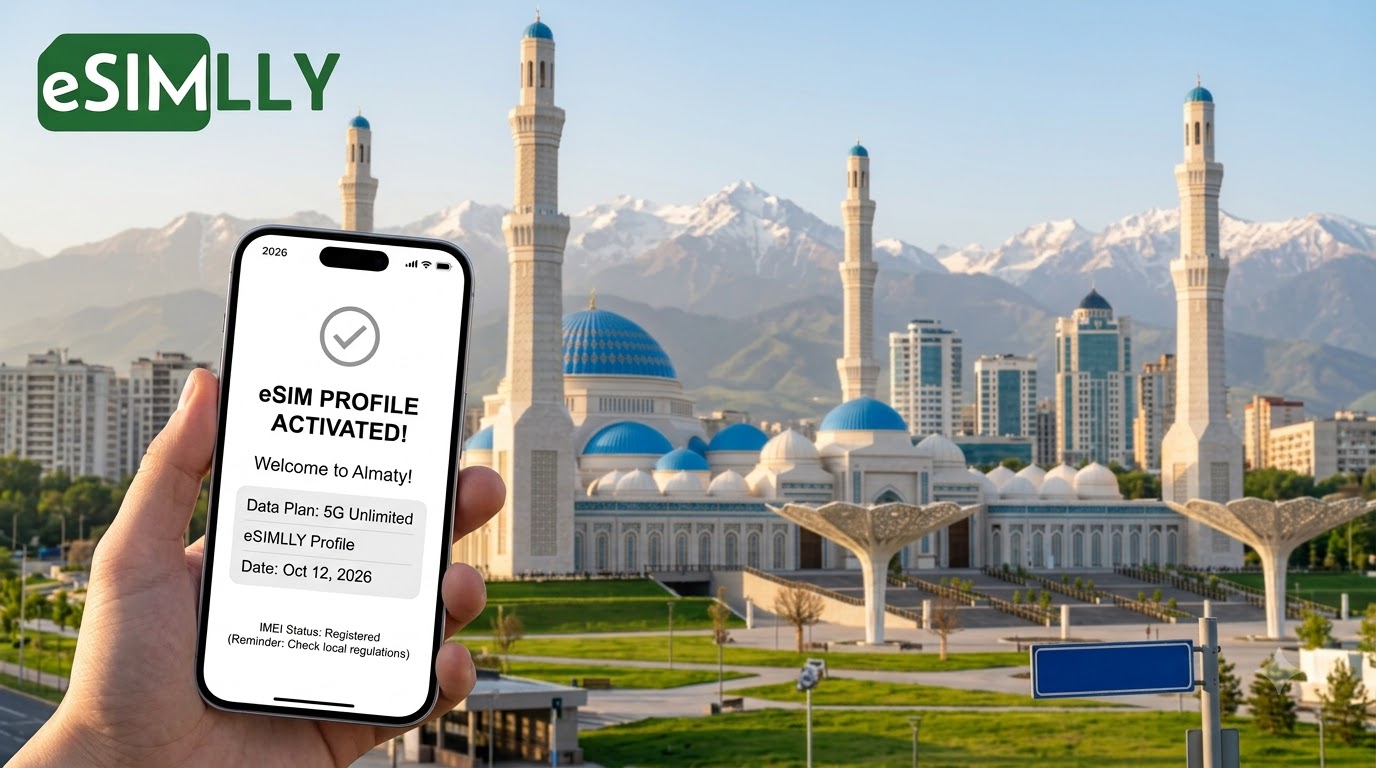
Beeline, Kcell or Tele2? Why foreign phones on Kazakh SIMs need IMEI registration, and when a travel eSIM is easier. Plans from $1.50.
ReadGet instant data and savings on your next trip with eSIMLLY. Simple activation, no physical SIM card needed.


