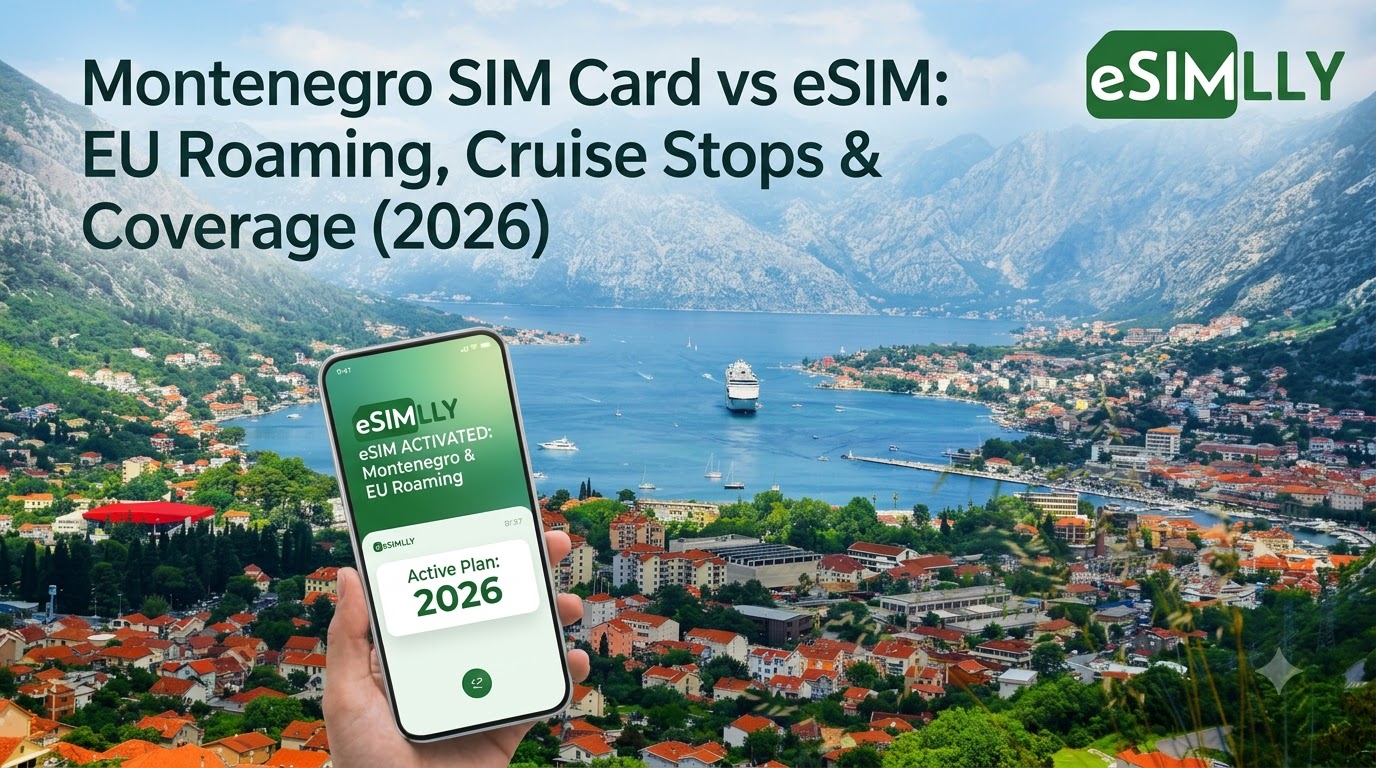
Montenegro SIM Card vs eSIM: EU Roaming, Cruise Stops & Coverage (2026)
Montenegro isn't in EU Roam Like at Home. Compare tourist SIMs and eSIMs for Kotor, Budva and Durmitor, including cruise day stops. Plans from $2.
ReadAuthor
Angelus Sharma
Published
July 27, 2026

Imagine stepping off an international flight, unlocking your phone, and instantly connecting to a local mobile network without scanning a QR code, visiting an airport SIM kiosk, or searching for Wi-Fi.
No physical SIM cards.
No roaming activation.
No lengthy setup.
Your phone is simply ready.
This is the direction the smartphone industry is heading.
As eSIM technology becomes standard across modern devices, manufacturers are beginning to rethink how connectivity is delivered. Instead of asking users to install a travel eSIM every time they travel, future smartphones may arrive with travel-ready eSIM capabilities already built into the device.
For travellers, this represents one of the biggest improvements in mobile connectivity since smartphones replaced feature phones.
Rather than thinking about SIM cards, travellers will simply think about destinations.
Mobile connectivity has gone through several major transformations.
First came large removable SIM cards.
Then smaller micro SIMs.
Followed by nano SIMs.
After that, embedded SIM technology eliminated the need for removable cards altogether.
The next stage is even more seamless.
Instead of asking travellers to search for connectivity before every trip, smartphones themselves are becoming travel-ready from the day they are purchased.
The device already contains the technology needed.
The only thing left is selecting the right travel plan.
A built-in travel eSIM does not mean your phone permanently includes free global mobile data.
Instead, it means the device is designed to support digital travel connectivity from the beginning.
Rather than installing hardware, users simply activate an appropriate travel plan whenever they need it.
The eSIM capability is already inside the phone.
The experience becomes dramatically simpler than replacing physical SIM cards.
For years, travellers followed the same routine.
Land.
Find airport Wi-Fi.
Search for a SIM card shop.
Compare local telecom operators.
Swap SIM cards.
Configure mobile settings.
Finally, connect.
Built-in eSIM capability removes most of these steps.
Instead, travellers can prepare before departure and activate connectivity within moments after arriving.
The technology becomes almost invisible.
Today's smartphones already replace dozens of travel essentials.
They function as:
Boarding passes
Hotel room keys
Digital wallets
Navigation systems
Cameras
Language translators
Travel planners
Entertainment centres
Adding built-in travel connectivity is the next logical step.
Rather than treating internet access as a separate purchase, smartphones increasingly become complete travel companions.
Modern travellers expect immediate access to information.
Within minutes of landing they often need to:
Open maps
Contact accommodation
Book transport
Access banking apps
Download boarding passes
Share arrival updates
Confirm reservations
Waiting until after arrival to organise connectivity feels increasingly outdated.
Built-in travel eSIM capability removes this delay.
Airport SIM card counters have served travellers for decades.
However, they often involve:
Long queues
Limited opening hours
Language barriers
Higher prices
Limited plan choices
Travellers increasingly prefer arranging connectivity before departure.
A built-in eSIM makes that process significantly easier.
International roaming remains convenient.
Unfortunately, convenience often comes with higher costs.
Travellers frequently encounter:
Daily roaming charges
Expensive data rates
Usage restrictions
Unexpected bills
Travel eSIMs provide an alternative with prepaid plans designed specifically for international travel.
When the eSIM capability already exists inside the phone, activating those plans becomes even more convenient.
Many international holidays involve several destinations.
For example:
France
Italy
Spain
Germany
Austria
Switzerland
Thailand
Singapore
Malaysia
Vietnam
Indonesia
United States
Canada
Mexico
Instead of searching for a new SIM card every time they cross a border, travellers can simply activate another compatible travel plan using the eSIM functionality already available on their device.
International business travellers value speed.
Their priorities include:
Reliable internet
Video meetings
Email access
Navigation
Expense management
Corporate communication
Every minute spent searching for mobile connectivity is time taken away from work.
Built-in travel eSIM capability allows professionals to begin working almost immediately after arrival.
Remote workers often change countries every few weeks.
Managing physical SIM cards quickly becomes frustrating.
With built-in eSIM support, they can maintain multiple travel profiles digitally while keeping their primary mobile number active.
Their smartphone becomes a portable connectivity hub that adapts to every destination.
Not every traveller is comfortable changing SIM cards.
Some worry about:
Losing their home SIM
Damaging the SIM tray
Incorrect installation
Compatibility issues
A built-in travel eSIM removes much of this uncertainty.
There is no physical card to insert or remove.
Everything happens digitally.
Physical SIM cards are small and easy to lose.
Travellers occasionally misplace:
SIM cards
SIM trays
Ejector tools
Digital connectivity removes these risks.
Your mobile identity stays securely stored inside your smartphone.
Every traditional SIM card requires:
Plastic
Packaging
Shipping
Retail storage
Built-in eSIM technology reduces dependence on physical cards, helping decrease waste throughout the supply chain.
As millions of travellers adopt digital connectivity, these environmental benefits become increasingly significant.
In the near future, preparing for an international trip may look something like this:
Book flights.
Reserve accommodation.
Purchase travel insurance.
Choose a travel eSIM plan.
Activate it.
Travel.
Everything happens digitally.
Connectivity becomes another routine step in trip preparation rather than something travellers solve after arrival.
Future smartphones are expected to become even smarter.
Instead of asking users to search manually for travel connectivity, devices may eventually recommend suitable plans based on:
Destination
Travel dates
Previous journeys
Expected data usage
Preferred travel regions
The traveller simply confirms the recommendation.
The rest happens automatically.
Although built-in travel eSIM capability is becoming more common, there are still practical considerations.
Travellers should always confirm:
Device compatibility
Carrier unlock status
Destination coverage
Supported networks
Plan validity
These checks help ensure a smooth experience before departure.
Connectivity is no longer a separate product.
It is becoming part of the overall travel experience.
Just as hotels, airlines, digital wallets, and navigation apps transformed travel over the last decade, built-in eSIM capability is simplifying another important part of the journey.
Travellers increasingly expect internet access to be available as naturally as GPS or Bluetooth.
The easier connectivity becomes, the less travellers need to think about it.
Built-in eSIM capability simplifies the hardware side of international connectivity, but travellers still need flexible mobile data plans for the destinations they visit.
This is where digital travel providers play an important role.
eSIMLLY offers travel eSIM plans across more than 150 countries and regions, allowing travellers to activate the connectivity already supported by their smartphones. Whether you're taking a weekend city break, travelling across Europe by rail, exploring Asia, or visiting multiple continents for work, eSIMLLY provides destination-specific and regional plans that can be activated in minutes without replacing a physical SIM card.
As smartphones become increasingly travel-ready, services like eSIMLLY help travellers unlock that capability with simple, digital-first connectivity wherever they go.
The history of smartphones has been about removing unnecessary hardware.
Keyboards disappeared.
Dedicated GPS devices disappeared.
MP3 players disappeared.
Digital cameras replaced compact cameras for many people.
Physical SIM cards are following the same path.
Tomorrow's travellers may never need to visit a mobile phone shop after landing in another country because the capability to connect will already be built into the device they carry every day.
The future of travel connectivity isn't about carrying more equipment—it's about needing less.
Built-in travel eSIM technology represents another step toward completely frictionless international travel. Instead of treating mobile connectivity as a separate task, travellers can activate digital data plans using hardware that's already part of their smartphone.
There are no plastic SIM cards to replace, no airport kiosks to visit, and no interruption when moving between destinations.
As more devices ship with travel-ready eSIM capability and digital connectivity becomes an expected part of the travel experience, staying online abroad will become as simple as opening an app and choosing your destination.
For modern travellers, the best travel technology is the technology they don't have to think about—and built-in travel eSIMs are bringing that future closer than ever.
As more travellers, enterprises, and device manufacturers embrace eSIM technology, China is set to become one of the most influential markets in shaping the future of mobile communication—and providers like eSIMLLY are well positioned to help international travellers stay connected across China and more than 160 destinations worldwide.
Instant activation, hotspot included and no roaming fees in the destinations from this guide.
Montenegro isn't in EU Roam Like at Home. Compare tourist SIMs and eSIMs for Kotor, Budva and Durmitor, including cruise day stops. Plans from $2.
Read
Zvartnots airport SIM or eSIM? Compare Armenia's operators, tourist bundle prices and when each option makes sense. eSIM plans from $2.50.
Read
Beeline, Kcell or Tele2? Why foreign phones on Kazakh SIMs need IMEI registration, and when a travel eSIM is easier. Plans from $1.50.
ReadGet instant data and savings on your next trip with eSIMLLY. Simple activation, no physical SIM card needed.


