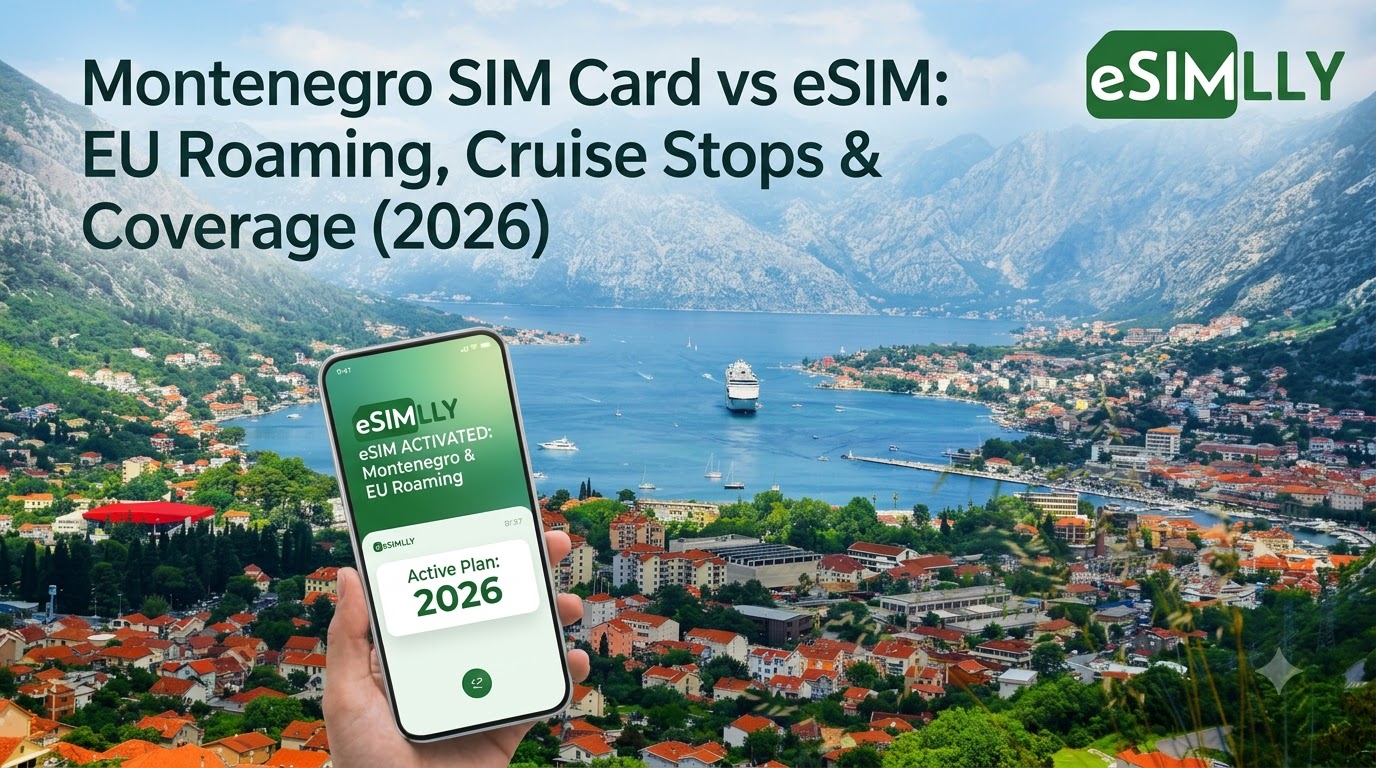
Montenegro SIM Card vs eSIM: EU Roaming, Cruise Stops & Coverage (2026)
Montenegro isn't in EU Roam Like at Home. Compare tourist SIMs and eSIMs for Kotor, Budva and Durmitor, including cruise day stops. Plans from $2.
Read
If you're planning to use an eSIM for travel, you may wonder: How long does an eSIM last?
The answer depends on what you mean by "eSIM."
An eSIM profile is the digital SIM profile installed on your smartphone. A travel eSIM plan is the data service associated with that profile. The plan usually has a defined validity period, while the profile itself may remain stored on your device after the plan has expired.
For travelers, the most important question is usually:
"How many days can I use my travel eSIM?"
Travel eSIM plans can commonly have validity periods such as 7 days, 15 days, 30 days, or longer, depending on the provider, destination and selected package.
With eSIMLLY, different destinations offer different data allowances and validity periods, so you can choose a plan based on the length of your trip.
Explore eSIMLLY travel eSIM plans
A travel eSIM plan lasts for the validity period specified by the plan.
For example, a plan might provide:
1 GB for 7 days
5 GB for 15 days
10 GB for 30 days
20 GB for 30 days
The exact options vary by destination and provider.
It's important to understand that data allowance and validity are two separate limits.
For example:
10 GB + 15 days
means you have up to 10 GB of data during the plan's 15-day validity period.
If you use only 6 GB but the 15-day validity period ends, the remaining data may no longer be usable.
Similarly, if you use all 10 GB before the 15 days are over, you may need a top-up or another plan if one is available.
The eSIM technology itself does not work like a physical SIM card that has to be replaced after a certain number of years.
An eSIM is a digital SIM profile stored on your device.
The service attached to that profile is what usually has a defined validity period.
Think of it this way:
eSIM profile = digital SIM
eSIM plan = connectivity service
Validity = how long that particular service can be used
An eSIM profile can therefore remain on your phone even after its associated travel plan has expired.
However, that does not mean the expired plan can continue providing mobile data.
There is no universal duration for every travel eSIM.
Common travel eSIM validity periods include:
Validity | Typical use |
|---|---|
1–7 days | Short trips and weekend travel |
10–15 days | Holidays and business trips |
30 days | Longer vacations and extended travel |
60–90 days | Longer stays |
180+ days | Certain long-term or specialized plans |
Not every provider offers every validity period, and the available options depend on the destination and plan.
For example, eSIMLLY currently offers different validity options for destinations such as Japan, France and Singapore.
This is one of the most important things to check before buying an eSIM.
The validity period does not necessarily begin simply because you purchased the eSIM.
Depending on the specific plan, validity may begin when:
The eSIM is activated
The eSIM connects to a supported network
The eSIM is installed
Another activation condition specified by the provider occurs
Because providers and plans can work differently, you should always check the activation instructions before installing an eSIM well before your trip.
For example, if you buy a 15-day eSIM for a trip next month, you need to know whether installing it today would start those 15 days or whether validity begins later according to the plan's activation conditions.
Once activated, the eSIM lasts for the validity period specified by the plan.
For example:
7-day plan
If the plan becomes active according to its terms, its service is available for the stated 7-day validity period.
15-day plan
The service is available for the stated 15-day validity period.
30-day plan
The service is available for the stated 30-day validity period.
The exact starting point and counting method can vary, so always refer to the plan details.
Only if you purchased a plan with a 7-day validity period.
The eSIM technology itself does not automatically expire after seven days.
For example, if you purchase a 30-day travel eSIM, it is not going to stop working after seven days simply because it is an eSIM.
The duration comes from the specific plan you purchased.
Again, only if the plan has a 30-day validity period.
A 30-day travel eSIM is generally designed to provide service for the stated validity period once activated according to the plan's conditions.
After the validity period ends, the associated data service may stop working.
The eSIM profile may still remain visible on your phone.
When the plan expires, the included data service generally stops.
You may see:
No mobile data
An inactive or expired plan
No remaining data allowance
A need to purchase another plan
The eSIM profile itself may remain installed.
This is why you shouldn't assume that an eSIM shown in your phone's settings is automatically an active plan.
If your provider supports top-ups or additional packages, you may be able to continue using the service through an available option.
It depends on the provider and plan.
Some travel eSIM services may support:
Data top-ups
Additional packages
Extensions
Renewals
Other plans may require you to purchase a new eSIM.
If you're extending your trip, check your provider's options before the original plan expires.
For eSIMLLY, available options depend on the destination and selected plan.
Generally, you cannot continue using the expired plan's included data after the validity period has ended.
You may need to:
Purchase additional data.
Top up the existing service if supported.
Purchase another eSIM plan.
Switch to another available connection.
Whether an existing eSIM profile can be reused depends on the provider and plan.
Don't assume that an expired travel eSIM will automatically become active again when you return to the same country.
Sometimes, but you should not assume that you can.
A travel eSIM can be associated with a particular plan, destination and service period.
For example, suppose you use an eSIM for a trip to Japan in April.
You might return to Japan six months later and still see the old eSIM profile on your phone.
That doesn't necessarily mean the old plan can be reused.
Check whether the provider supports top-ups, renewals or reuse of that particular profile.
If not, you may need a new eSIM plan.
No, you should not assume that deleting an eSIM resets its validity period.
Once a plan has been activated, its validity is generally determined by the provider's system.
Removing the profile from your phone does not necessarily stop the provider's validity clock.
Likewise, reinstalling it later does not necessarily give you a fresh validity period.
If you're considering deleting an eSIM, check the provider's instructions first.
Usually, you should not assume that switching off your phone pauses the plan's validity.
If your plan is valid for a defined number of days after activation, its validity normally follows the provider's stated rules rather than the number of hours your phone is powered on.
For example, a 15-day plan should not automatically become a 30-day plan simply because you switched your phone off for several days.
This is why choosing the appropriate validity period is important.
This depends on the provider's activation rules.
There are two different situations:
Some plans may remain unused until their activation condition is met.
Some plans may need to be activated within a specified period after purchase.
Therefore, don't assume that an unused eSIM can be stored forever.
Before buying an eSIM for a future trip, check:
Activation deadline
Installation requirements
Validity period
Activation conditions
You may be able to, but it is important to check the plan conditions.
Suppose you are planning a holiday six weeks from now.
You find an eSIM that looks suitable and want to purchase it immediately.
Before doing so, check:
When must the eSIM be activated?
When does the validity period begin?
Does installation trigger activation?
Does the plan have an activation deadline?
If the plan has a limited activation window, buying too early may not be appropriate.
For many travelers, purchasing closer to departure makes managing the activation period simpler.
An eSIM on an iPhone doesn't have one universal lifespan.
The duration depends on the specific mobile plan associated with the eSIM.
A travel plan might last:
7 days
15 days
30 days
Longer, depending on the provider
The iPhone can store the eSIM profile according to the device's capabilities, but the plan's service validity is controlled by the provider.
The same basic principle applies to compatible Samsung devices.
The eSIM profile is stored digitally, while the associated service plan has its own validity period.
The exact eSIM functionality can vary by Samsung model, market and carrier.
If you're planning to use an eSIM on Samsung, check device compatibility before purchasing.
Compatible Google Pixel devices can support eSIM functionality, but exact support depends on the model and market.
Again, the eSIM profile itself and the travel plan's validity should be considered separately.
The duration of your mobile data service comes from the plan you purchase, not from the phone brand.
eSIMLLY offers different travel eSIM plans with different validity periods depending on the destination and data package.
For example, current destination options include:
eSIMLLY Japan plans include options with 7-day, 15-day and 30-day validity periods.
Explore eSIMLLY Japan eSIM plans
eSIMLLY France plans include 7-day, 15-day and 30-day options, depending on the package.
Explore eSIMLLY France eSIM plans
Germany plans also include different validity periods, including 7-day, 15-day and 30-day options depending on the package.
Explore eSIMLLY Germany eSIM plans
The available plans can change, so always check the current destination page before purchasing.
Choosing the right validity period is relatively simple.
Start with the length of your trip.
A short-validity plan may be sufficient.
A 7-day or longer plan may be appropriate depending on your exact travel dates and activation rules.
A 15-day plan can provide more flexibility.
A 30-day plan may be more convenient.
Consider a longer-validity plan or a service that supports top-ups or additional data.
Don't choose based only on the number of days, though.
Also consider how much data you expect to use.
Both matter.
Imagine two plans:
Plan A: 5 GB for 30 days
Plan B: 10 GB for 15 days
Plan A gives you more time but less data.
Plan B gives you more data but less time.
The better fit depends on your trip.
If you're travelling for 12 days and use a lot of data, Plan B could provide a larger data allowance within your travel period.
If you're travelling for 25 days and use relatively little data, Plan A could provide a longer validity period.
The important thing is to match both data allowance and validity to your trip.
The easiest way is to choose a plan that matches your expected trip duration and usage.
Before purchasing, estimate how you'll use your connection.
Consider:
Maps and navigation
Messaging
Social media
Video calls
Streaming
Cloud backups
App updates
Hotspot usage
You can also use Wi-Fi when available to reduce mobile-data consumption.
If your provider offers a top-up option, check the terms so you know what to do if you run low on data.
Using Wi-Fi can reduce how much mobile data you consume, but it generally does not automatically extend the plan's validity period.
For example, if your eSIM plan has a 15-day validity period, using Wi-Fi for several days doesn't normally turn it into a 20-day plan.
It can help you preserve your data allowance, but it doesn't necessarily change the plan's validity period.
This distinction is important.
If your trip is longer than the available validity period, you have several possible options.
Depending on the provider and plan, you may be able to:
Choose a longer-validity plan
Purchase additional data
Top up the existing service
Purchase another plan
For example, if you originally planned a 10-day trip but decide to stay for another two weeks, check your eSIM options before your current plan expires.
Before purchasing a travel eSIM, check:
How many days is the plan valid?
When does validity begin?
Does installation trigger activation?
Is there an activation deadline?
How much data is included?
What happens to unused data?
Can I top up?
Can I extend the plan?
Can the eSIM be reused?
Does the plan cover all my destinations?
Is my phone compatible?
This takes only a few minutes and can prevent unexpected problems during your trip.
There is no single duration. The travel eSIM plan determines how long the service lasts. Common validity periods include 7, 15 and 30 days, depending on the provider and plan.
The eSIM profile may remain stored on your device, but a travel eSIM's data plan normally has a defined validity period.
It depends on the plan. Travel eSIMs can commonly have 7-day, 15-day or 30-day validity periods, with other options available depending on the provider and destination.
Only if the specific plan has 7-day validity. The eSIM technology itself does not automatically expire after seven days.
A 30-day plan generally ends after its stated validity period. Other eSIM plans can have different durations.
The expired plan's included data generally cannot continue to be used. You may need a top-up, extension or new plan if available.
Not necessarily. Reuse depends on the provider and the specific eSIM plan.
Not necessarily. Plan validity generally follows the provider's activation and expiration rules.
You should not assume it does. Removing the profile does not necessarily pause or reset an already activated plan.
You may be able to, but check the activation deadline and validity rules before purchasing far in advance.
Some providers or plans may support top-ups, extensions or additional packages. Check the specific plan.
Check your provider account, order information or the plan details for the activation date, validity period and expiration information.
eSIMLLY offers different validity periods depending on the destination and plan. Current destination options include plans with different 7-day, 15-day and 30-day durations.
View eSIMLLY travel eSIM options
So, how long does an eSIM last?
There isn't one universal answer.
The eSIM profile is the digital SIM stored on your compatible phone, while the travel eSIM plan determines how long you can use the associated mobile data service.
For travelers, common plan durations include 7 days, 15 days and 30 days, although the exact options depend on the destination and provider.
Before buying an eSIM, always check:
The data allowance
The validity period
When validity begins
Activation requirements
Activation deadline
Top-up options
Whether unused data expires
Whether the eSIM can be reused
With eSIMLLY, you can choose travel eSIM plans across 160+ countries, with different data allowances and validity periods designed for different travel needs.
Explore eSIMLLY travel eSIM plans
Choose the right data allowance and validity period, and your travel eSIM can keep you connected throughout your trip without unnecessary connectivity hassles.
Instant activation, hotspot included and no roaming fees in the destinations from this guide.
Montenegro isn't in EU Roam Like at Home. Compare tourist SIMs and eSIMs for Kotor, Budva and Durmitor, including cruise day stops. Plans from $2.
Read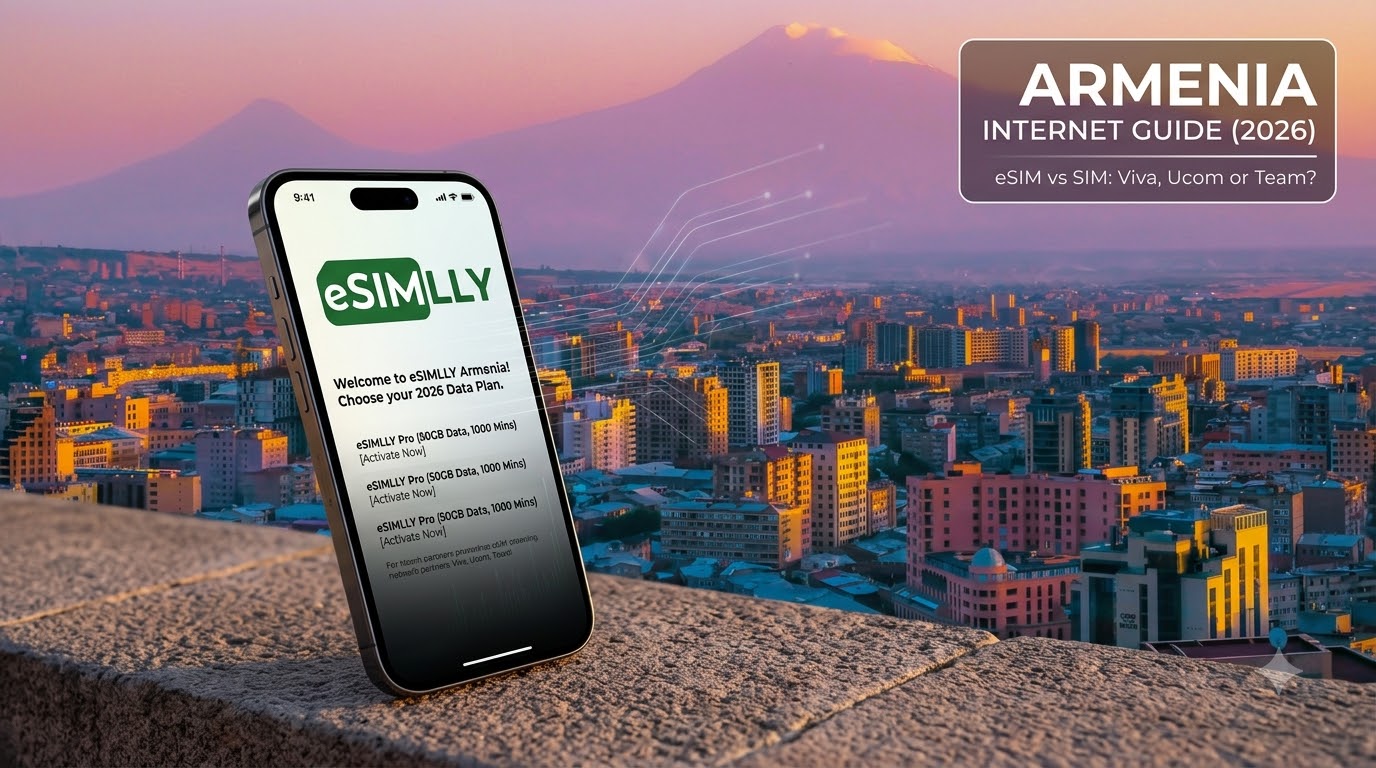
Zvartnots airport SIM or eSIM? Compare Armenia's operators, tourist bundle prices and when each option makes sense. eSIM plans from $2.50.
Read
Beeline, Kcell or Tele2? Why foreign phones on Kazakh SIMs need IMEI registration, and when a travel eSIM is easier. Plans from $1.50.
ReadGet instant data and savings on your next trip with eSIMLLY. Simple activation, no physical SIM card needed.


