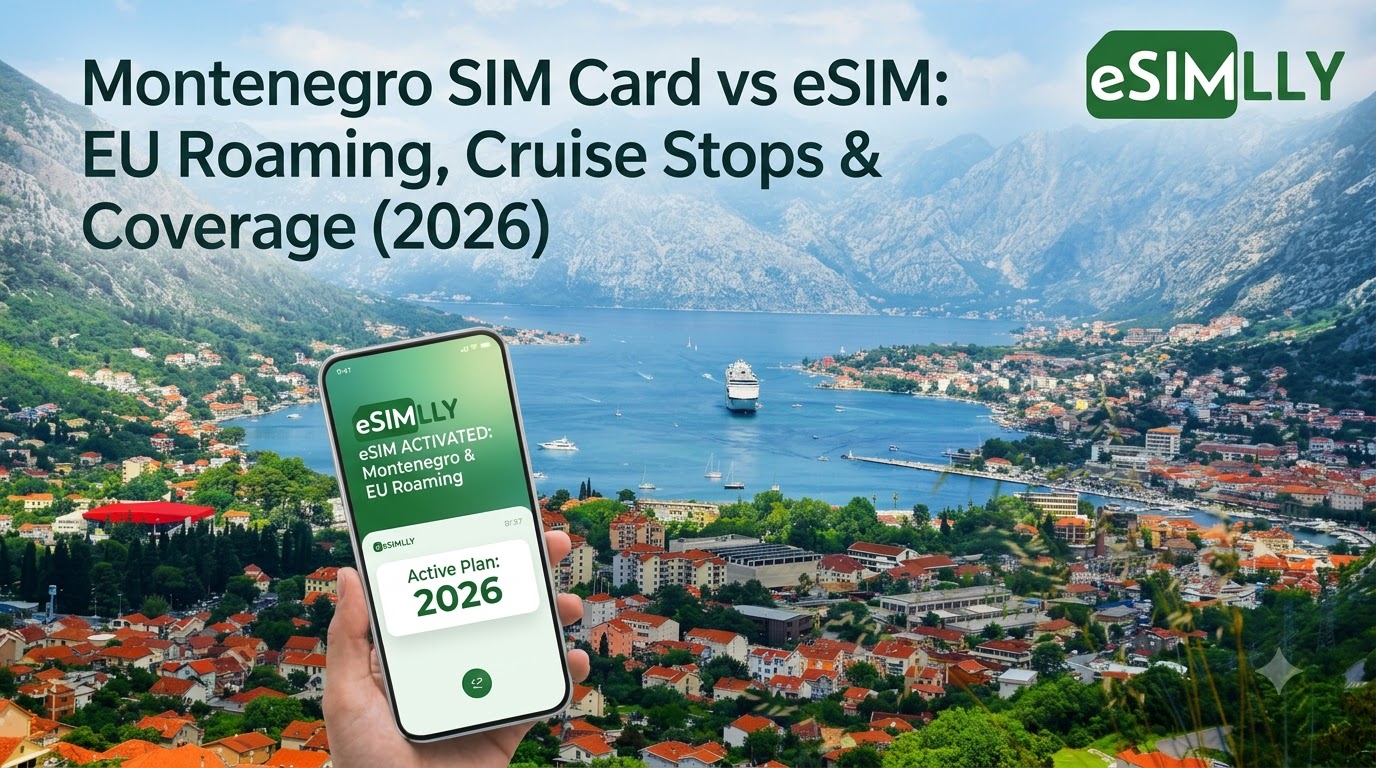
Montenegro SIM Card vs eSIM: EU Roaming, Cruise Stops & Coverage (2026)
Montenegro isn't in EU Roam Like at Home. Compare tourist SIMs and eSIMs for Kotor, Budva and Durmitor, including cruise day stops. Plans from $2.
ReadAuthor
Angelus Sharma
Published
July 30, 2026

One of the most common questions travellers ask before purchasing an eSIM is:
"How much mobile data do I actually need?"
Choose too little, and you may run out of data halfway through your trip. Choose too much, and you could end up paying for data you'll never use.
The right answer depends on several factors, including how long you're travelling, which apps you use, whether you'll have access to Wi-Fi, and whether you're travelling for business or leisure.
Some travellers only need mobile data for navigation and messaging. Others spend hours on video calls, upload thousands of photos, stream high-definition videos, or work remotely while travelling.
This guide explains how mobile data is used, estimates data consumption for common travel activities, and helps you choose the right eSIM plan for your next trip.
Many travellers underestimate how many everyday activities depend on internet access.
Typical uses include:
Navigation
Messaging
Social media
Hotel bookings
Flight check-ins
Translation apps
Restaurant searches
Ride-hailing
Online banking
Weather updates
Video calls
Streaming
Cloud backups
Some of these activities consume very little data, while others can quickly use several gigabytes in a single day.
Before choosing a plan, it's useful to understand the units used by mobile providers.
1 GB = 1,024 MB
Most travel eSIM plans are measured in gigabytes (GB).
For perspective:
1 GB is suitable for light use over a short trip.
5–10 GB is enough for many holidaymakers.
20 GB or more is often preferred by heavy users and remote workers.
The figures below are approximate and can vary depending on the app, media quality, and device settings.
Activity | Approximate Data Usage |
|---|---|
Text messaging | Very low |
Email (without large attachments) | Very low |
Maps & navigation | Low |
Web browsing | Low |
Social media scrolling | Moderate |
Uploading photos | Moderate |
Music streaming | Moderate |
Video calls | High |
HD video streaming | Very high |
Cloud backups | Very high |
Video streaming and automatic cloud syncing are usually the biggest contributors to mobile data usage.
Use the guide below to estimate the plan that best matches your travel style.
Typical activities:
Messaging
Maps
Restaurant searches
Light browsing
Estimated usage:
500 MB–1 GB per day
Ideal for:
Weekend trips
Business travellers
Short holidays
Typical activities:
Navigation
Social media
Photo uploads
Ride-hailing
Translation
Online bookings
Estimated usage:
1–2 GB per day
Ideal for:
Most tourists
Families
Couples
City breaks
Typical activities:
Frequent social media
Video uploads
Music streaming
Video calls
Daily content sharing
Estimated usage:
2–4 GB per day
Ideal for:
Influencers
Digital creators
Backpackers
Active travellers
Typical activities:
Zoom or Teams meetings
Cloud storage
Remote desktop
File transfers
Collaboration apps
Estimated usage:
3–8 GB per day
Ideal for:
Business travellers
Freelancers
Remote employees
Digital nomads
Recommended:
Light use: 2 GB
Moderate use: 3–5 GB
Heavy use: 8–10 GB
Recommended:
Light use: 3 GB
Moderate use: 5–8 GB
Heavy use: 10–15 GB
Recommended:
Light use: 5 GB
Moderate use: 10 GB
Heavy use: 15–20 GB
Recommended:
Light use: 5–8 GB
Moderate use: 10–15 GB
Heavy use: 20 GB or more
Recommended:
Light use: 8 GB
Moderate use: 15–20 GB
Heavy use: 25 GB or more
Recommended:
Light use: 10–15 GB
Moderate use: 20–30 GB
Heavy use: 40 GB+
Remote workers may require even larger plans depending on video conferencing and cloud usage.
Your mobile data requirements depend heavily on Wi-Fi availability.
If you'll regularly use:
Hotel Wi-Fi
Airport Wi-Fi
Café Wi-Fi
Office Wi-Fi
your mobile data consumption may be significantly lower.
However, don't assume public Wi-Fi will always be available, secure, or fast enough for important tasks.
A travel eSIM ensures you're connected whenever Wi-Fi isn't an option.
The following activities use the most data.
Watching movies or TV shows in high definition can consume several gigabytes in a short period.
Downloading entertainment over Wi-Fi before travelling is often a better option.
Business meetings and family video calls can quickly increase your daily usage.
Consider using Wi-Fi whenever available.
Many phones automatically upload photos and videos to cloud storage.
Disable automatic backups while using mobile data if you want to conserve your allowance.
Automatic app updates can consume hundreds of megabytes.
Configure updates to occur only over Wi-Fi.
Simple changes can dramatically reduce consumption.
Google Maps and other navigation apps allow offline downloads before travelling.
Update apps and operating systems before leaving your accommodation.
Photos and videos are often the largest hidden source of data usage.
Streaming in standard definition instead of high definition can significantly reduce data consumption.
Both iPhone and Android provide built-in mobile data tracking tools.
Checking your usage every day helps avoid surprises.
Unlimited plans sound attractive, but they aren't always necessary.
For many travellers, a fixed data plan offers better value because:
It costs less.
It matches typical travel usage.
Most holidays don't require unlimited streaming.
However, unlimited or very large plans may be worthwhile if you:
Work remotely.
Stream frequently.
Upload videos daily.
Attend online meetings.
Travel for several weeks.
Always review the plan's terms and any applicable fair usage policies before purchasing.
Many travellers either overestimate or underestimate their requirements.
Avoid:
Choosing the cheapest plan without considering your usage.
Forgetting about video calls.
Leaving cloud backups enabled.
Assuming hotel Wi-Fi will always work.
Ignoring trip length.
Streaming movies over mobile data unnecessarily.
Choosing the right plan before travelling can save both money and frustration.
Open:
Settings → Cellular → Mobile Data Usage
You can view how much data each app has consumed.
Open:
Settings → Network & Internet → Data Usage
Menu names may vary slightly depending on the manufacturer.
Monitoring usage helps you decide whether your current plan is sufficient.
Although every traveller is different, these recommendations work well for most trips.
Trip Type | Suggested Data |
Weekend city break | 2–3 GB |
One-week holiday | 5–10 GB |
Two-week holiday | 10–20 GB |
One-month travel | 20–40 GB |
Digital nomad | 30 GB+ or large/unlimited plan |
If you're unsure, it's often better to choose a slightly larger plan than risk running out of data during your trip.
Choosing the right amount of mobile data should be simple.
eSIMLLY provides travel eSIM services in more than 160 countries and regions, offering a wide range of destination-specific and regional plans to suit different travel styles and trip lengths. Whether you're taking a short city break, embarking on a month-long adventure, or travelling for business, eSIMLLY makes it easy to select a plan that matches your needs.
With instant digital delivery, transparent pricing, and straightforward activation, you can install your eSIM before departure and enjoy reliable connectivity from the moment you arrive.
There is no single "perfect" amount of travel data because every traveller uses their phone differently. The best plan depends on your destination, trip duration, access to Wi-Fi, and the activities you expect to do each day.
By estimating your usage before travelling and choosing an appropriate eSIM plan, you can avoid running out of data, reduce unnecessary costs, and stay connected throughout your journey with confidence.
The future of travel is connected, digital, and increasingly seamless—and embedded eSIMs are becoming one of the technologies making that future possible.
As more travellers, enterprises, and device manufacturers embrace eSIM technology, staying connected across borders is becoming simpler than ever. With eSIMLLY providing travel eSIM services in more than 160 countries and regions, international travellers can enjoy reliable mobile connectivity wherever their journey takes them.
Montenegro isn't in EU Roam Like at Home. Compare tourist SIMs and eSIMs for Kotor, Budva and Durmitor, including cruise day stops. Plans from $2.
Read
Zvartnots airport SIM or eSIM? Compare Armenia's operators, tourist bundle prices and when each option makes sense. eSIM plans from $2.50.
Read
Beeline, Kcell or Tele2? Why foreign phones on Kazakh SIMs need IMEI registration, and when a travel eSIM is easier. Plans from $1.50.
ReadGet instant data and savings on your next trip with eSIMLLY. Simple activation, no physical SIM card needed.


