Montenegro SIM Card vs eSIM: EU Roaming, Cruise Stops & Coverage (2026)
Montenegro isn't in EU Roam Like at Home. Compare tourist SIMs and eSIMs for Kotor, Budva and Durmitor, including cruise day stops. Plans from $2.
ReadAuthor
Angelus Sharma
Published
August 12, 2026
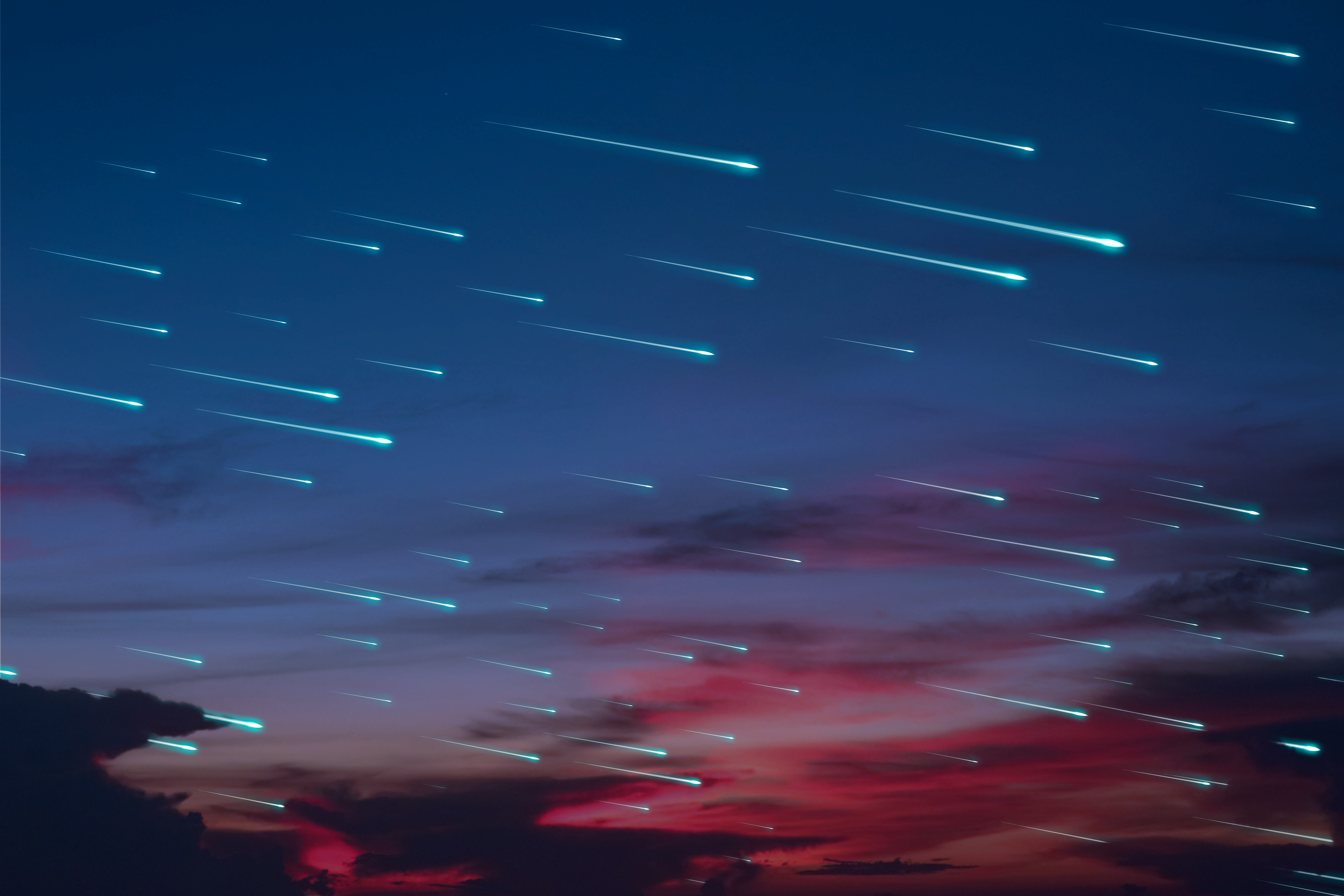
The Perseid meteor shower 2026 is shaping up to be one of the year's best opportunities for skywatchers. The annual meteor shower will be active from July 17 through August 24, with its main peak occurring around August 12–13, 2026.
This year brings an especially useful advantage for anyone planning a night under the stars: the Perseid peak coincides with a New Moon, leaving the sky much darker than it would be under bright moonlight.
For travelers, that makes August a particularly good time to escape city lights, head toward darker skies, and turn meteor watching into a travel experience.
And if you're traveling to do it, there is one practical detail worth arranging before you leave: mobile data.
The Perseid meteor shower 2026 runs from July 17 to August 24, but the best opportunity to see the shower comes around August 12–13.
The International Meteor Organization lists the main maximum around August 13 at 02:00–04:00 UTC, while noting that the broader maximum can vary.
So, if you're planning a dedicated Perseid-watching trip, the nights surrounding August 12–13 deserve priority.
The Moon will be essentially new during the peak. The IMO describes the New Moon on August 12 as providing excellent conditions for optical observations.
That matters because moonlight can brighten the sky and make fainter meteors harder to see.
In other words, Mother Nature has switched off the night-light.
You will often see the Perseids described as producing up to 100 meteors per hour. That's the theoretical Zenithal Hourly Rate under ideal conditions.
Actual viewing rates are usually lower.
For 2026, the International Meteor Organization expects background activity to be lower than the traditional ZHR of 100, while other forecasts point to roughly 30–50 meteors per hour under suitable conditions.
Your actual experience will depend on:
Light pollution
Cloud cover
Your location
How dark the sky is
How long you watch
How well your eyes have adapted to darkness
Don't arrive expecting the sky to behave like a fireworks display. Meteors are unpredictable. That's rather the point.
The Perseids come from debris left behind by Comet 109P/Swift-Tuttle.
Every year, Earth passes through this debris stream. Tiny particles enter Earth's atmosphere at high speed and burn up, creating the bright streaks we see as meteors.
The shower gets its name from Perseus, the constellation near its radiant—the apparent point from which the meteors seem to originate.
Are you also planning your next trip to the North America, let eSIMLLY be your partner and we will manage all of your connectivity and ensure that your journey remains smooth and hassle free. Click here to start your eSIM journey and activate your eSIM at just $2.5 for 1 GB only
You don't need a telescope to enjoy the Perseids. In fact, a wide field of view is useful because meteors can appear across different parts of the sky rather than only around the radiant.
For most observers, the hours after midnight and before dawn offer the best chance of seeing Perseid meteors.
The radiant climbs higher during the night, while Earth rotates into the stream of debris left by Comet Swift-Tuttle.
For the best experience:
Start late. Give yourself several hours if possible.
Look broadly. Don't stare at one tiny section of sky.
Stay patient. Meteor activity comes in bursts and lulls.
Avoid bright screens. Your eyes need time to adapt to darkness.
The IMO notes that mid-northern latitudes are particularly well suited to Perseid observations.
The simple answer is: somewhere dark.
You don't necessarily need to travel internationally. A rural location outside your nearest city can make a dramatic difference.
Good locations include:
Rural countryside
Mountains
Remote beaches
National parks
Dark-sky reserves
Areas far from major cities
High-elevation locations with clear horizons
The Perseids are particularly favorable for observers in the Northern Hemisphere. They can be seen from some southern locations, but the shower is not well positioned for much of the Southern Hemisphere.
eSIMLLY eSIM plans can help you stay connected while traveling to darker locations.
Use mobile data to check weather conditions, navigate to remote viewing spots, communicate with your travel group, and find accommodation or transport without having to depend entirely on public Wi-Fi.
Before purchasing, check the available plan for your destination and choose the data allowance and validity period that match your trip.
Are you also planning your next trip to the North America, let eSIMLLY be your partner and we will manage all of your connectivity and ensure that your journey remains smooth and hassle free. Click here to start your eSIM journey and activate your eSIM at just $2.5 for 1 GB only
Watching the Perseids is wonderfully low-tech.
You need:
A dark location.
Clear skies.
A comfortable place to sit or lie down.
Time.
Your eyes.
That's it.
Find a safe location with as little artificial light as possible. Lie back and give your eyes time to adjust.
It can take around 20–30 minutes for your eyes to become properly accustomed to darkness, so avoid repeatedly checking a bright phone screen.
If you need your phone for navigation, reduce the brightness or use a red-light/night setting.
Photographing the Perseid meteor shower is more difficult than simply watching it, but you don't need an expensive observatory.
A smartphone can work surprisingly well under the right conditions.
Use night mode.
If your phone supports a dedicated astrophotography or night mode, use it.
Use a tripod.
Long exposures and handheld photography are not friends.
Keep the phone stable.
Use a timer or remote shutter to avoid shaking the device.
Find a dark location.
The darkest sky is usually more important than having the fanciest phone.
Shoot repeatedly.
You may take dozens or hundreds of frames before catching a meteor.
Include some foreground.
Trees, mountains, buildings, or landscapes can give the photograph scale and context.
Astrophotography can consume a lot of power.
Long exposures, camera use, GPS, mobile data, and a bright screen can drain your phone quickly.
Bring a power bank and keep your phone charged before heading to your viewing location.
Are you also planning your next trip to the North America, let eSIMLLY be your partner and we will manage all of your connectivity and ensure that your journey remains smooth and hassle free. Click here https://esimlly.com/en/esim-united-states to start your eSIM journey and activate your eSIM at just $2.5 for 1 GB only
Meteor watching sounds like an activity where you can switch your phone off.
The journey to the meteor shower is another story.
You may need mobile data to check:
Weather forecasts
Cloud cover
Maps
Dark-sky locations
Road conditions
Public transport
Hotel reservations
Emergency information
Local attractions
This becomes particularly useful if you've deliberately travelled away from a city to escape light pollution.
Explore eSIMLLY's international eSIM options to arrange mobile data before your trip.
An eSIM lets you download your travel plan digitally rather than searching for a physical SIM after landing. Once your plan is active, you can use mobile data for navigation and communication while keeping your physical SIM available where your phone supports Dual SIM functionality.
You don't have to treat the meteor shower as a standalone event.
Instead, build a trip around it.
Spend the day exploring a destination. Have dinner somewhere local. Leave the city after sunset. Find a dark location. Set up your camera.
Then wait for the sky to change.
The Perseids are particularly well suited to this kind of travel because the viewing conditions are often comfortable during Northern Hemisphere summer.
And in 2026, the New Moon removes one of the biggest obstacles to good meteor watching: bright lunar light.
There's an unusual astronomical coincidence in 2026.
The August 12 New Moon also produces a total solar eclipse. That means some travelers can potentially experience a total solar eclipse during the day and the Perseid meteor shower after dark on the same date.
The two events aren't occurring simultaneously—the eclipse is a daytime event and the Perseids are best observed at night—but together they make August 12 an unusually interesting date for astronomy enthusiasts.
eSIMLLY travel eSIMs give you another reason to prepare your connectivity before departure.
Whether you're traveling for the Perseids, the eclipse, or both, having mobile data ready means you can navigate unfamiliar areas, check changing weather conditions, stay in touch with companions, and share your experience without relying on expensive roaming.
A little preparation makes a long night outside much more comfortable.
Comfortable reclining chair or blanket
Warm layer
Water
Snacks
Fully charged smartphone
Power bank
Tripod
Camera
Red-light torch
Offline maps
Weather forecast
Appropriate footwear
If you're traveling to a remote location, download important maps and information before leaving reliable connectivity.
There's an amusing contradiction to modern stargazing.
We use technology to find the darkest possible place to escape technology.
Your phone can be useful for getting there, checking the weather, taking photographs, and contacting someone in an emergency. But once you're settled under the sky, put it away for a while.
The Perseids don't need an audience refreshing a weather app every thirty seconds.
Check eSIMLLY's travel eSIM plans before you leave home.
Choose a plan that fits your destination and trip length, install your eSIM in advance if supported, and keep your mobile data ready for the parts of the journey where you actually need it.
Then spend the night looking up—not searching for Wi-Fi.
Are you also planning your next trip to the North America, let eSIMLLY be your partner and we will manage all of your connectivity and ensure that your journey remains smooth and hassle free. Click here https://esimlly.com/en/esim-united-states to start your eSIM journey and activate your eSIM at just $2.5 for 1 GB only
The Perseid meteor shower 2026 offers an unusually attractive combination for skywatchers: a major annual meteor shower, warm Northern Hemisphere nights, and a New Moon providing excellent dark-sky conditions around the peak.
The shower is active from July 17 to August 24, but the nights around August 12–13 are the ones to prioritize.
Find somewhere dark. Check the weather. Bring a chair. Charge your phone.
Use your mobile data to get there.
Then put the phone down.
The Perseids are happening in the sky. Not in your notification bar.
The Perseid meteor shower is active from July 17 to August 24, 2026, with the main peak occurring around August 12–13.
The best viewing is generally after midnight and toward dawn, when the Perseid radiant is higher in the sky.
Very little. The Perseid peak coincides with a New Moon on August 12, creating excellent conditions for observing faint meteors.
The traditional Perseid ZHR is around 100, but actual observed rates are lower. For 2026, forecasts indicate roughly 30–50 meteors per hour under favorable conditions, although actual numbers vary significantly by location and sky quality.
Choose a location with dark skies, clear weather, and minimal artificial light. Rural areas, mountains, national parks, and dark-sky locations can provide better conditions than cities.
Yes. The Perseids are best enjoyed with the naked eye because meteors can appear across a wide area of the sky.
Yes. A smartphone with a suitable night mode, stable tripod, dark location, and repeated exposures can capture Perseid meteors. A dedicated camera gives you more control for advanced astrophotography.
Yes. A travel eSIM can provide mobile data for navigation, weather forecasts, communication, accommodation, and other travel needs without requiring you to rely entirely on public Wi-Fi.
eSIMLLY's international eSIM plans are designed for travelers who need mobile data while abroad. Check the available plan for your specific destination before purchasing, since pricing, data allowances, validity, and coverage vary by country.
Are you also planning your next trip to the North America, let eSIMLLY be your partner and we will manage all of your connectivity and ensure that your journey remains smooth and hassle free. Click here https://esimlly.com/en/esim-united-states to start your eSIM journey and activate your eSIM at just $2.5 for 1 GB only
Montenegro isn't in EU Roam Like at Home. Compare tourist SIMs and eSIMs for Kotor, Budva and Durmitor, including cruise day stops. Plans from $2.
Read
Zvartnots airport SIM or eSIM? Compare Armenia's operators, tourist bundle prices and when each option makes sense. eSIM plans from $2.50.
Read
Beeline, Kcell or Tele2? Why foreign phones on Kazakh SIMs need IMEI registration, and when a travel eSIM is easier. Plans from $1.50.
ReadGet instant data and savings on your next trip with eSIMLLY. Simple activation, no physical SIM card needed.


