Montenegro SIM Card vs eSIM: EU Roaming, Cruise Stops & Coverage (2026)
Montenegro isn't in EU Roam Like at Home. Compare tourist SIMs and eSIMs for Kotor, Budva and Durmitor, including cruise day stops. Plans from $2.
ReadAuthor
Angelus Sharma
Published
August 1, 2026
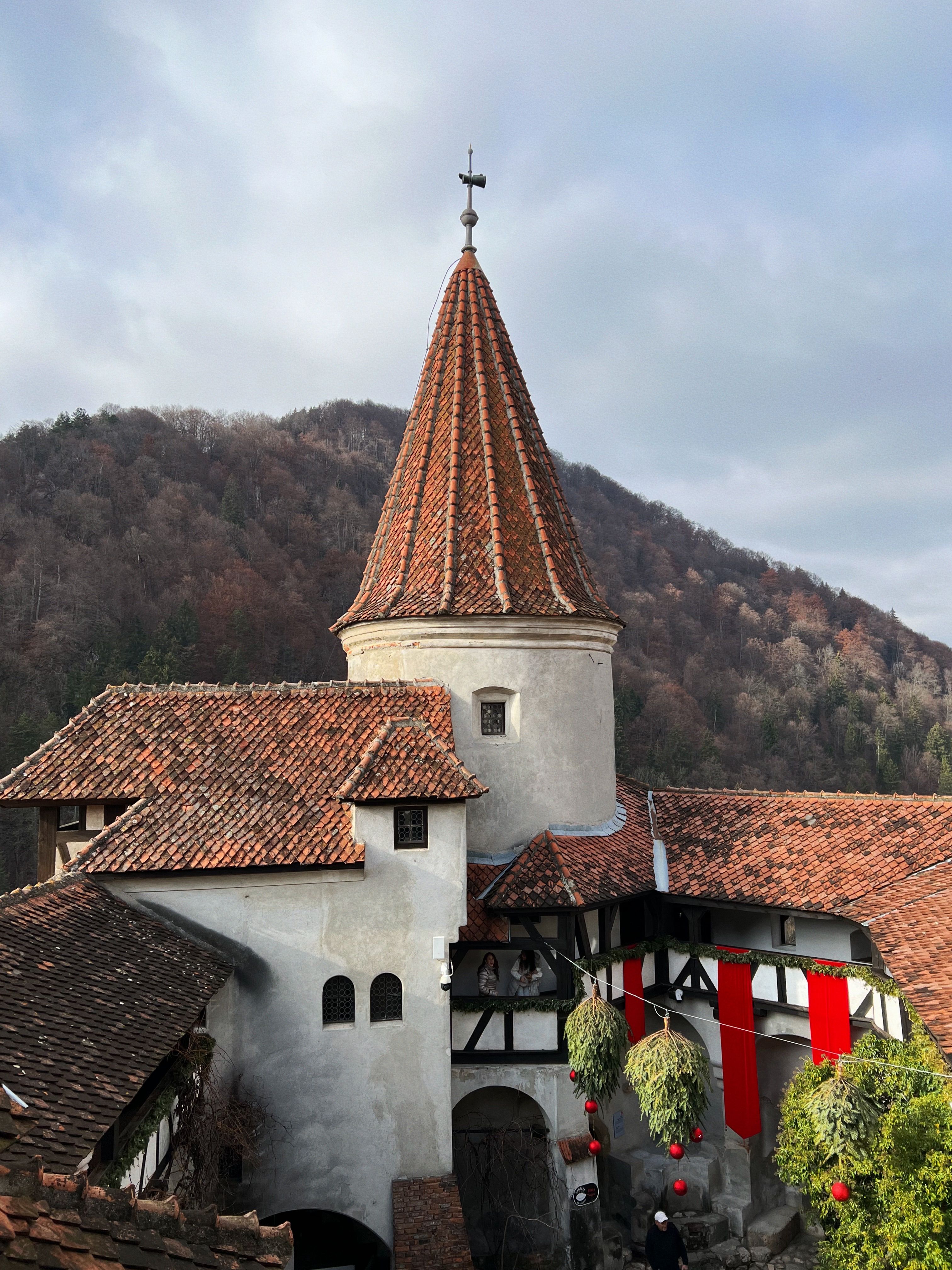
Dark towers. Medieval stone walls. Secret passages. Misty Transylvanian mountains. Centuries of royal and military history.
Few European castles have captured the imagination quite like Bran Castle in Romania.
Better known internationally as “Dracula’s Castle,” this dramatic fortress has become inseparable from vampire mythology and Bram Stoker’s legendary novel Dracula.
But Bran Castle is much more than a Dracula-themed attraction.
Its history stretches back more than six centuries, from its role as a defensive fortress to its transformation into a royal residence and eventually one of Romania’s best-known museums.
Today, travellers can walk through historic chambers, discover a hidden staircase, see collections of armour and weapons, explore the castle grounds, and learn how history and vampire folklore became intertwined.
And getting there is an adventure in itself.
Many visitors travel from Bucharest through the Transylvanian countryside, while others stay in nearby Brașov and combine Bran Castle with mountain scenery, medieval towns, fortresses, and hiking.
Because the journey involves navigation, train or bus information, attraction tickets, weather forecasts, translation, and potentially several stops across Romania, having mobile data throughout the trip is useful. International travellers can prepare a Romania travel eSIM through eSIMLLY before departure and arrive with their connectivity already organised.
Start your eSIM journey with eSIMLLY activate your eSIM instantly with just at $1.5 for 1 GB here https://esimlly.com/en/esim-romania
Here’s everything you need to know before entering the world of Dracula.
The attraction commonly known as Dracula’s Castle is Bran Castle, situated near the town of Bran in Romania’s Transylvania region, close to Brașov.
The castle occupies a dramatic position above the surrounding landscape, with its towers rising above the rocky terrain around Bran Gorge.
Its appearance—towers, steep roofs, stone walls, narrow passages, and mountainous surroundings—fits remarkably well with the popular image of a mysterious Transylvanian castle.
That visual connection helped establish Bran Castle’s association with Bram Stoker’s Dracula.
Stoker himself never visited Romania.
Nevertheless, the fictional Count Dracula lives in Transylvania, and similarities between descriptions associated with the novel and Bran Castle helped create a connection that Romania’s tourism industry understandably embraced.
The result?
One of Europe’s most famous castle experiences.
Start your eSIM journey with eSIMLLY activate your eSIM instantly with just at $1.5 for 1 GB here https://esimlly.com/en/esim-romania
This requires separating history from literature.
Bran Castle is real.
Count Dracula is fictional.
Vlad III—better known as Vlad the Impaler—was a real historical ruler whose reputation has frequently been connected with Dracula mythology.
The relationship between all three, however, is far less direct than popular culture sometimes suggests.
Bram Stoker published Dracula in 1897, creating one of literature’s most enduring fictional characters.
Over time, Bran Castle became strongly associated with the story because of:
Its Transylvanian location
Dramatic architecture
Medieval appearance
Connections drawn between Vlad the Impaler and Dracula
Its similarity to popular interpretations of Dracula’s fictional castle
So while you shouldn’t expect historians to tell you Count Dracula actually slept there, the combination of history, literature, architecture, and folklore makes the castle fascinating.
Bran Castle’s real history is arguably more interesting than the vampire mythology surrounding it.
During the late 14th century, the Saxons of Brașov constructed the stone fortress at Bran.
Its position made it strategically important for controlling and defending routes through the region.
The fortress played a role in protecting the surrounding territory during an era of military pressure and Ottoman expansion.
Vlad III ruled Wallachia during parts of the 15th century and became infamous for his brutal methods of punishment.
His historical reputation later contributed to comparisons with Bram Stoker’s fictional Dracula.
Vlad passed through the Bran region during military activity connected with Brașov, but the popular image of Bran Castle as his permanent vampire residence belongs to legend rather than established history.
Bram Stoker published Dracula in 1897.
The novel transformed the vampire into one of the most recognisable characters in Gothic literature.
Although Stoker never travelled to Romania, his fictional Transylvania helped permanently associate the region with Dracula mythology.
In the early 20th century, Bran Castle entered another fascinating chapter.
The city of Brașov gifted the castle to Queen Marie of Romania, who transformed it into a royal residence.
The castle consequently became associated not only with medieval defence and Dracula legends but also with Romanian royalty.
Rooms connected with Queen Marie remain among the most interesting parts of a modern visit.
Following major political changes in Romania, the communist authorities took control of the castle.
Princess Ileana, Queen Marie’s daughter, was forced into exile.
Bran Castle subsequently entered a very different period in its history.
The castle was eventually legally returned to descendants of Princess Ileana.
It later reopened as a privately operated museum and has developed into one of Romania’s most recognisable tourist destinations.
Today, Bran Castle represents several histories simultaneously:
Medieval Romania. Royal Romania. Communist-era Romania. And, of course, fictional Transylvania.
Bran Castle appeals to considerably more than vampire fans.
More than six centuries of history are packed into the fortress.
Its transition from defensive stronghold to royal residence makes it particularly interesting for travellers fascinated by European history.
If Bram Stoker, Gothic fiction, vampires, or horror films are your thing, this is practically a pilgrimage.
Even though the historical connection is complicated, the atmosphere makes Bran Castle an irresistible destination for Dracula enthusiasts.
The castle’s towers, stone walls, narrow openings, courtyards, staircases, and dramatic position above the landscape create an unforgettable architectural experience.
Unsurprisingly, Bran Castle becomes particularly atmospheric around Halloween.
Special events and themed experiences can attract large crowds around late October.
If you want maximum Gothic atmosphere, this is arguably the time to visit.
If you hate crowds, perhaps not.
If your Romanian itinerary includes Bucharest or Brașov, Bran Castle is relatively easy to incorporate.
It also provides a convenient gateway to exploring more of Transylvania.
Start your eSIM journey with eSIMLLY activate your eSIM instantly with just at $1.5 for 1 GB here https://esimlly.com/en/esim-romania
Don’t arrive expecting an enormous palace.
Bran Castle’s appeal comes from its compact medieval spaces, passages, rooms, towers, and layered history.
Allow roughly one to two hours for the main visit, depending on crowds and how much time you spend exploring exhibitions.
Bran Castle began as a fortress, and its defensive origins remain visible.
Look for:
Thick stone walls
Narrow windows
Towers
Turrets
Defensive positioning
Internal passages
The castle’s architecture feels considerably more atmospheric when you remember that many of these features originally served practical military purposes.
The interior courtyard is one of Bran Castle’s most recognisable spaces.
Its enclosed medieval design provides excellent views of the surrounding walls and architectural details.
A deep historic well also sits within the courtyard.
Take your time here—the castle can feel crowded inside, and the courtyard provides a chance to appreciate the overall structure.
What respectable Gothic castle would be complete without a secret passage?
Bran Castle contains a hidden staircase connecting different levels of the building.
It was reportedly concealed for a long period before being rediscovered.
Today, visitors can pass through it as part of the castle experience.
Claustrophobic?
You’ve been warned.
Dracula fan?
You’re probably already excited.
The royal history of Bran Castle provides a fascinating contrast to its darker reputation.
Rooms associated with Queen Marie of Romania reveal the castle’s transformation into a royal residence.
Visitors can explore spaces connected with the Queen and King Ferdinand while learning more about their lives and the castle’s role during this period.
Collections of weapons and armour help visitors understand Bran Castle’s military past.
These displays provide useful historical context for a building originally designed to defend an important regional route.
They also make the castle experience more tangible—particularly for younger visitors who may find medieval military history considerably more exciting when swords are involved.
Depending on your ticket, additional areas may include exhibitions focusing on historical torture instruments and punishment methods.
This experience is considerably darker than the royal rooms and may not suit every visitor.
For those interested in medieval history’s less comfortable chapters, however, it adds another dimension to the castle visit.
Start your eSIM journey with eSIMLLY activate your eSIM instantly with just at $1.5 for 1 GB here https://esimlly.com/en/esim-romania
Another optional experience is the interactive Time Tunnel, which uses multimedia elements to present aspects of Bran Castle’s history.
It's a more modern contrast to the medieval surroundings and can be included with certain ticket options.
Once you've finished exploring the castle interior, don't immediately leave.
The surrounding grounds provide another perspective on Bran Castle.
Walking through the park also gives you opportunities to photograph the fortress from outside—arguably where its dramatic architecture looks most impressive.
Most international visitors reach Bran Castle from either Bucharest or Brașov.
Your best option depends on how much time you have and whether you prefer independent travel or an organised tour.
Bucharest is a common starting point because many international travellers arrive in Romania through the capital.
Bran Castle can be visited as a day trip, although expect a fairly long day.
You have several options.
This is the easiest solution for travellers who don't want to coordinate multiple forms of transport.
Many tours from Bucharest combine:
Bran Castle
Brașov
Peleș Castle or other regional attractions
The advantage is simplicity.
Transport and itinerary planning are largely handled for you.
Independent travellers can take a train from Bucharest to Brașov.
From Brașov, continue toward Bran using local buses, taxis, or other available transport.
This approach also allows you to spend additional time exploring Brașov rather than treating it merely as a transfer point.
Driving provides the most flexibility.
A car allows you to combine Bran Castle with:
Brașov
Râșnov
Mountain landscapes
Hiking areas
Other Transylvanian attractions
Depending on the season and your itinerary, Romania’s famous mountain roads can make the journey itself part of the experience.
Always check current road and weather conditions before setting out.
A trip to Bran Castle often involves considerably more movement than a standard city attraction.
You might travel from Bucharest to Brașov, continue to Bran, visit Râșnov, stop for lunch, check opening hours, navigate mountain roads, or change your plans because of weather.
That makes reliable mobile data particularly useful.
Before arriving in Romania, travellers can arrange a Romania travel eSIM through eSIMLLY.
With eSIMLLY, compatible-device users can prepare their mobile connectivity digitally before departure and use their phone for practical travel tasks such as:
Google Maps
Train information
Bus routes
Ride-hailing
Castle ticket information
Translation
Weather forecasts
Restaurant searches
Hotel communication
Messaging
eSIMLLY provides travel eSIM services across more than 160 countries and regions, which is particularly useful if Romania forms part of a larger European trip.
You should be thinking about Dracula while travelling through Transylvania—not hunting for public Wi-Fi.
Start your eSIM journey with eSIMLLY activate your eSIM instantly with just at $1.5 for 1 GB here https://esimlly.com/en/esim-romania
Tickets can be purchased through Bran Castle’s official channels or at the attraction.
During busy periods, purchasing ahead can reduce uncertainty.
Different ticket categories may provide access to different experiences, including the main castle, park, optional exhibitions, and guided experiences.
Prices and packages can change.
For that reason, check the current official ticket information shortly before your visit rather than relying on an old travel article or screenshot.
This is especially important during:
Summer
Weekends
Public holidays
Halloween
Major Romanian holiday periods
Bran Castle operates as a year-round attraction, but the experience changes significantly with the seasons.
Spring provides pleasant temperatures and greener landscapes.
Crowds can also be more manageable than during peak summer periods.
Summer brings comfortable weather and longer daylight hours.
It’s also one of the busiest periods, so arriving early is advisable.
For atmosphere, autumn is difficult to beat.
Changing foliage, cooler temperatures, misty mountain scenery, and Halloween create exactly the environment most people imagine when thinking about Dracula’s Transylvania.
October is particularly popular.
Snow can transform Bran Castle into something that looks suspiciously like a Gothic film set.
Winter visitors should prepare for cold temperatures and potentially more complicated road conditions.
But visually?
Spectacular.
Don't make the mistake of travelling all the way into Transylvania, visiting Bran Castle, and immediately returning to Bucharest.
Several worthwhile attractions sit nearby.
The village surrounding the castle provides shops, restaurants, accommodation, and local attractions.
Spend some time walking around rather than treating it purely as the entrance to the castle.
A short journey from Bran takes you toward Râșnov, known for its historic fortress.
The elevated position provides impressive views across the surrounding Transylvanian landscape.
Combining Bran and Râșnov creates an excellent medieval-themed day.
Travelling with children?
Dino Parc provides a family-oriented contrast to castles and medieval history.
Life-sized dinosaur models and educational elements make it particularly useful for families visiting the region.
Wildlife enthusiasts can consider visiting the bear sanctuary near Zărnești.
The sanctuary focuses on rescued brown bears and provides an alternative wildlife experience within reach of Bran.
Choose organised visits and follow the sanctuary's current visitor requirements.
If your ideal Transylvania trip involves mountains rather than vampires, make time for Piatra Craiului National Park.
The area offers:
Hiking
Mountain scenery
Meadows
Wildlife
Caves
Outdoor adventures
It's an excellent addition for travellers spending several days in the region.
Brașov deserves far more than a quick transit stop.
The historic centre offers colourful architecture, cafés, churches, squares, mountain views, and a distinctly Central European atmosphere.
For many travellers, the best itinerary is to stay in Brașov and use it as a base for exploring Bran and surrounding attractions.
Bran Castle isn't a place for delicate footwear.
You'll encounter staircases, uneven surfaces, outdoor areas, and changing mountain weather.
Consider packing:
Passport and travel documents
Payment cards
Some Romanian lei
Comfortable clothing
Shoes with good grip
Light jacket or fleece
Rain protection
Medication
Camera
Phone charger
Travel adapter
Portable power bank
Reusable water bottle
Small first-aid kit
Small day bag
Romania travel eSIM
If you're travelling during autumn or winter, bring warmer layers than you might need in Bucharest.
Mountain weather can change quickly.
Start your eSIM journey with eSIMLLY activate your eSIM instantly with just at $1.5 for 1 GB here https://esimlly.com/en/esim-romania
If Bran Castle awakens an unexpected obsession with dark towers, medieval architecture, and atmospheric historical destinations, there's no reason to stop in Romania.
Several destinations around Europe—and beyond—can continue the theme.
Whitby has a genuine connection with Bram Stoker's Dracula.
Its ruined abbey, cliffs, harbour, and atmospheric graveyard contributed inspiration to parts of the novel.
For Dracula enthusiasts, combining Bran Castle and Whitby creates an excellent literary travel theme.
Located in southwest London, Strawberry Hill is closely associated with Gothic Revival architecture.
Its decorative towers, arches, interiors, and theatrical appearance make it particularly interesting for architecture lovers.
Strasbourg's enormous Gothic cathedral dominates the historic city centre.
Its intricate façade, towering spire, astronomical clock, and stained glass make it one of Europe's great Gothic monuments.
Venice takes Gothic architecture in an entirely different direction.
The Doge's Palace combines elaborate stonework, arches, historic chambers, and one of Europe's most extraordinary urban settings.
Matsumoto Castle isn't Gothic architecture, but its dark exterior and dramatic appearance have earned it the nickname Crow Castle.
Travellers attracted to atmospheric historical architecture will probably appreciate it.
You can technically visit Bran Castle from Bucharest in a single day.
But if your schedule allows it, two to three days provides a much better experience.
A simple itinerary could look like this:
Day 1: Bucharest → Brașov → Explore Brașov
Day 2: Bran Castle → Râșnov → Surrounding attractions
Day 3: Piatra Craiului, bear sanctuary, additional Transylvania exploration → Return toward Bucharest
This gives you enough time to appreciate the region rather than spending most of your trip inside a vehicle.
Visiting Bran Castle isn't simply a matter of walking from your hotel to an attraction.
For many international travellers, the journey begins in Bucharest, continues by train or car toward Brașov, and then heads deeper into Transylvania toward Bran.
Along the way, you'll probably need mobile data to:
Navigate unfamiliar roads.
Check Romanian train information.
Find buses between Brașov and Bran.
Access digital tickets.
Check Bran Castle opening times.
Monitor mountain weather.
Translate Romanian information.
Find nearby restaurants.
Contact your accommodation.
Navigate toward Râșnov or other attractions.
Stay in touch with friends and family.
That's exactly where eSIMLLY becomes relevant to this particular journey.
Instead of depending entirely on hotel Wi-Fi or arranging a physical SIM after landing, international visitors with compatible devices can prepare their Romania connectivity before departure.
And because eSIMLLY provides travel eSIM services across more than 160 countries and regions, the same approach is useful if your Transylvania trip continues into Hungary, Austria, Germany, Italy, France, or elsewhere in Europe.
For a road trip or multi-country Gothic adventure, having your connectivity planned before you leave makes the journey considerably easier.
Start your eSIM journey with eSIMLLY activate your eSIM instantly with just at $1.5 for 1 GB here https://esimlly.com/en/esim-romania
Bran Castle succeeds because it offers two stories at once.
There's the castle of popular imagination: Dracula, vampires, dark corridors, Gothic towers, Halloween, and mysterious Transylvania.
Then there's the real castle: a medieval fortress shaped by centuries of Romanian history, military strategy, royal life, political change, and preservation.
Both are worth experiencing.
Walk through the secret staircase. Explore Queen Marie's rooms. Look across the Transylvanian landscape. Visit nearby Brașov and Râșnov. Spend time in the mountains. And if you're travelling in October, embrace the Dracula atmosphere shamelessly.
A journey through Transylvania also demonstrates how important connectivity has become to modern independent travel. When your itinerary involves trains, mountain roads, changing weather, attraction bookings, navigation, and multiple towns, your smartphone becomes one of your most useful travel tools.
For that reason, eSIMLLY fits naturally into a Bran Castle adventure. Travellers can prepare their Romania mobile data before departure and concentrate on exploring Transylvania once they arrive.
With travel eSIM services available across 160+ countries and regions worldwide, eSIMLLY can also keep your connectivity strategy simple if Dracula's Castle is only the beginning of a much larger European adventure.
The castle may belong to another century.
Fortunately, your connectivity doesn't have to.
Start your eSIM journey with eSIMLLY activate your eSIM instantly with just at $1.5 for 1 GB here https://esimlly.com/en/esim-romania
Instant activation, hotspot included and no roaming fees in the destinations from this guide.
Montenegro isn't in EU Roam Like at Home. Compare tourist SIMs and eSIMs for Kotor, Budva and Durmitor, including cruise day stops. Plans from $2.
Read
Zvartnots airport SIM or eSIM? Compare Armenia's operators, tourist bundle prices and when each option makes sense. eSIM plans from $2.50.
Read
Beeline, Kcell or Tele2? Why foreign phones on Kazakh SIMs need IMEI registration, and when a travel eSIM is easier. Plans from $1.50.
ReadGet instant data and savings on your next trip with eSIMLLY. Simple activation, no physical SIM card needed.


